Home / Services / Restorative Dentistry / Dental Implants
A dental implant is a small titanium or zirconia post that our team places directly into your jawbone, where it fuses with the bone over several months to form a stable, permanent foundation. Once healed, that post supports a custom-made crown, bridge, or denture that looks, feels, and functions like a natural tooth. Unlike removable dentures or tooth-supported bridges, an implant replaces the entire tooth structure, root included, which is what makes it the only restoration on the market today that also protects your jawbone from the shrinkage that follows tooth loss.
At Newark Smiles Dental, we treat implant dentistry as a long-term investment in your health, not just a cosmetic fix. Missing teeth affect how you chew, how your bite settles, how your face holds its shape over time, and how confident you feel when you speak or smile. Our team plans every implant case around your bone density, gum health, bite alignment, and personal goals so that the result holds up for decades rather than years.
Tooth loss rarely stays a single, isolated problem. Once a tooth is gone, the surrounding teeth begin to drift, the opposing tooth can over-erupt, and the jawbone underneath the gap starts to resorb because it no longer receives the stimulation a tooth root provides. Recognizing the early warning signs helps you address the issue before it affects more of your smile.
Most adults with missing teeth are reasonable candidates for implants, but success depends on a handful of specific factors we evaluate at your consultation. We take a 3D scan of your jaw, review your medical history, and assess your gum tissue before recommending treatment. This up-front diligence is why our implant patients see such consistently strong long-term outcomes.
Age alone is never a disqualifying factor. What matters more is the health of the tissue that will support the implant, and whether any underlying conditions need to be managed first. If you are not an ideal candidate today, we can often build a short-term plan, such as a bone graft or gum therapy, to get you there.
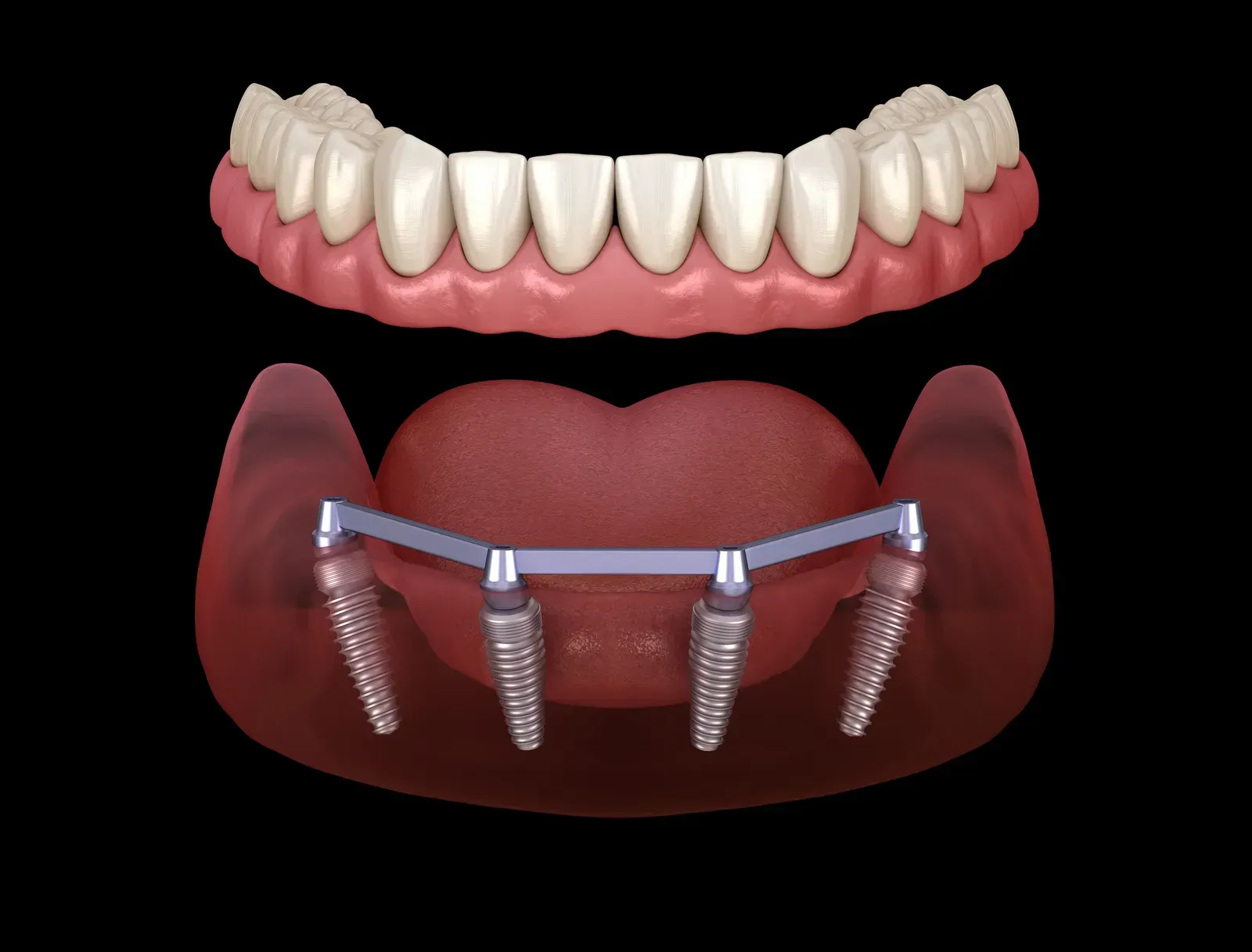
No two smiles need the same implant plan. Whether you are replacing a single tooth, several teeth in a row, or an entire arch, we build the treatment around your bone structure, budget, and the number of teeth involved. During your consultation, we walk through each option in detail so you understand exactly what is being placed and why.
Implants are not simply a way to fill a gap. They actively protect the rest of your oral structure in ways that bridges and dentures cannot. Because the post integrates directly with your jawbone, it recreates the biting force and stimulation that a natural tooth root once provided, which keeps the surrounding bone from shrinking over time.
Healing after implant placement happens in stages, and most patients are surprised by how manageable the recovery actually is. Mild swelling and tenderness in the first few days is normal and typically responds well to over-the-counter pain relief and an ice pack. Most people return to work and normal routines within two to three days of surgery.
The bone integration process, called osseointegration, takes several months to complete before we attach the final crown or bridge. We schedule follow-up visits throughout this window to confirm healing is on track and to make any adjustments needed before final restoration.
We start with a thorough exam, digital X-rays, and a 3D CBCT scan to measure your bone density and map out the exact position for each implant. This is also when we discuss whether grafting is needed and review your full treatment timeline and cost.
Some patients need a bone graft, sinus lift, or extraction before implant placement. These preliminary steps allow the site to heal fully and create a stable foundation before we place the post.
Under local anesthesia, we place the titanium or zirconia post directly into the jawbone. Most placements are completed in a single, comfortable appointment with minimal discomfort during the procedure itself.
Over the following three to six months, the implant fuses with your natural bone. We check in periodically during this phase to confirm everything is healing exactly as planned.
Once integration is confirmed, we attach a small connector piece called an abutment and place your custom-crafted crown, bridge, or denture, shaded and shaped to match the rest of your smile.
Implant dentistry rewards precision. The difference between a good result and a great one comes down to careful planning, imaging accuracy, and the experience of the team placing and restoring the implant. Here is what sets our approach apart for patients searching for a trusted dentist near me in Newark.
Total treatment time typically runs three to eight months, depending on whether grafting is needed and how quickly your bone integrates with the implant. A single-tooth implant without complications can sometimes be completed in around four months, while full-arch cases or those requiring bone grafting take longer. We map out a realistic timeline for you at your consultation.
The placement procedure itself is done under local anesthesia, so you should not feel pain during surgery. Most patients describe the recovery discomfort as similar to a tooth extraction, manageable with over-the-counter pain medication and generally improving significantly within two to three days.
Cost varies based on the number of implants, whether grafting is needed, and the type of final restoration. Many dental insurance plans cover a portion of implant treatment, and we also offer financing options. During your consultation, we provide a detailed, itemized estimate so you know exactly what to expect before treatment begins.
Dental implants have a success rate of roughly 95 to 98 percent, and with consistent oral hygiene and regular dental visits, they routinely last 20 years or longer. The implant post itself can last a lifetime, while the crown on top may occasionally need replacement after many years of normal wear.
Yes, in most cases. If a 3D scan shows insufficient bone at the implant site, we can rebuild it with a bone graft or sinus lift procedure first. This adds some time to the overall treatment, but it allows nearly all patients with bone loss to still become good candidates for implants.
A bridge relies on grinding down adjacent healthy teeth for support, and a denture rests on the gums and can shift or slip. An implant replaces the tooth root directly in the jawbone, standing independently without affecting neighboring teeth, and it preserves bone density in a way that bridges and dentures cannot.
Book your visit today and let our friendly team take great care of you.