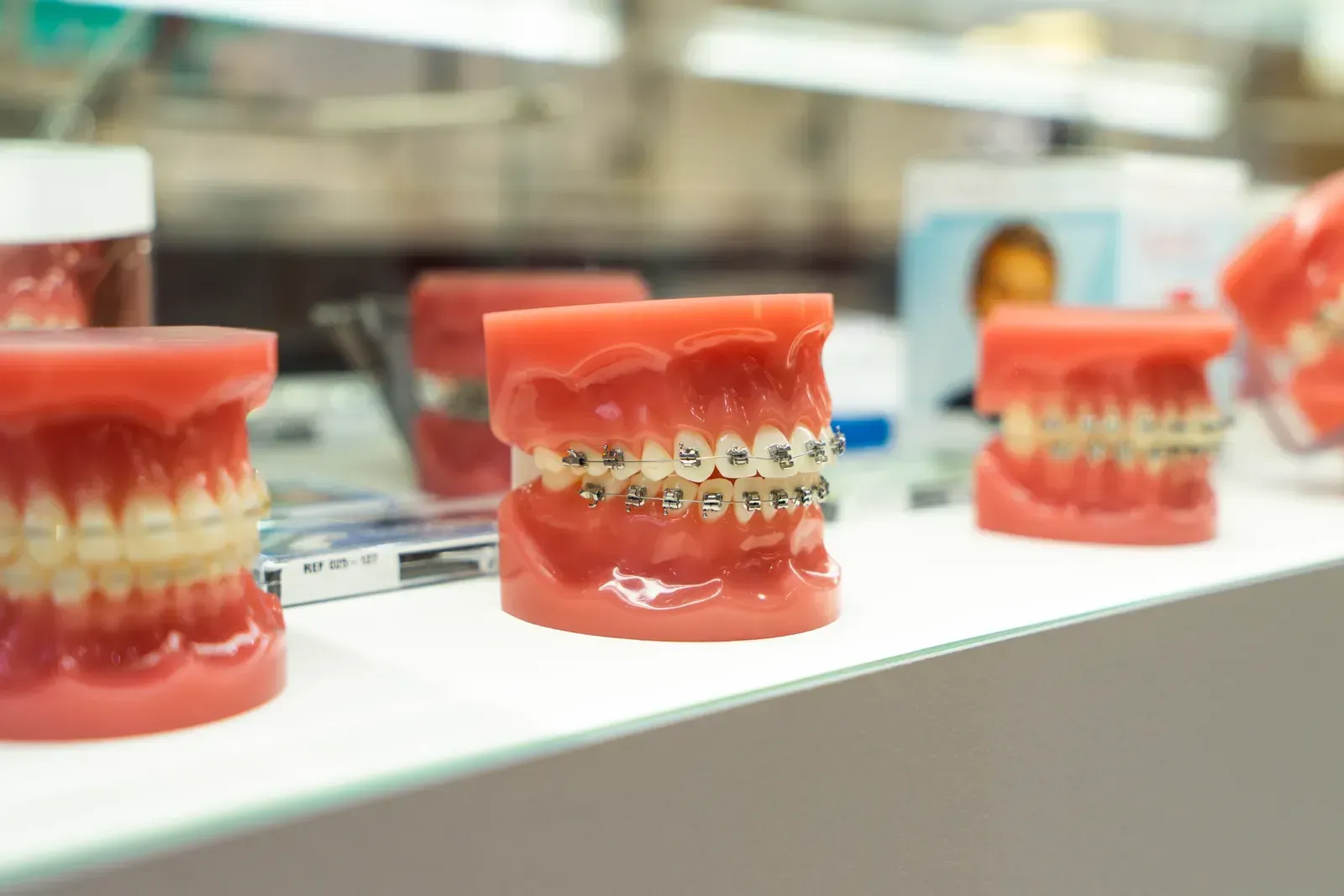
Crooked teeth and misaligned bites do more than affect how a smile looks in photographs. They can make brushing and flossing harder, wear down tooth enamel unevenly, strain the jaw joint, and chip away at a person's confidence every time they talk, laugh, or smile in public. At Newark Smiles Dental, braces are one of the core treatments within our orthodontics program, designed to gradually and predictably move teeth into their correct positions using calibrated, gentle pressure applied over time.
Whether you are bringing in your child for their first orthodontic evaluation, exploring options as a teenager who wants a straighter smile before graduation photos, or you are an adult finally ready to correct a bite issue you have lived with for years, our team builds a treatment plan around your specific mouth, your goals, and your timeline. Braces remain one of the most reliable, well-studied, and effective ways to correct crowding, gaps, overbites, underbites, and crossbites, and our Newark practice has helped patients of every age achieve results that last a lifetime.
Some orthodontic problems are obvious the moment you look in the mirror, while others develop slowly and go unnoticed until a routine dental exam reveals them. Understanding the warning signs can help you or your child get evaluated before minor misalignment becomes a bigger structural or functional problem. Our dentists check for these issues at every regular checkup, but knowing what to watch for at home matters too.
If any of the following sound familiar, it is worth scheduling an orthodontic consultation with our Newark team. Early identification almost always means simpler, faster, and less costly treatment down the road.
One of the most common misconceptions about braces is that they are only for children and teenagers. In reality, orthodontic treatment is appropriate at nearly any age, as long as the teeth and gums are healthy enough to withstand controlled movement. Bone and gum tissue respond to orthodontic pressure the same way whether a patient is 12 or 52, which is why we regularly treat adults who never had the chance to straighten their teeth earlier in life.
Before recommending braces, our dentists complete a full oral evaluation that includes digital X-rays, a bite assessment, and a review of your gum health. This lets us determine not just whether braces will work, but which type and timeline will give you the best possible outcome. Here is what generally makes someone a strong candidate:
There is no single "correct" braces system for every patient. The right choice depends on the complexity of the misalignment, your lifestyle, budget, and personal preference regarding appearance. During your consultation, we walk through each option honestly, including realistic expectations for treatment length and cost, so you can choose with confidence rather than guesswork.
Our practice offers the following orthodontic systems, all monitored closely with regular adjustment visits:
Straightening teeth is about far more than appearance, though a more confident smile is certainly a welcome outcome. Properly aligned teeth are easier to clean, distribute chewing forces more evenly, and reduce abnormal wear on tooth enamel and the jaw joint. Left uncorrected, orthodontic problems can quietly contribute to cavities, gum recession, and jaw pain over the years.
Patients who complete braces treatment at Newark Smiles Dental typically notice improvements across several areas of their oral and overall health:
Wearing braces successfully takes some adjustment to your daily routine, but the habits you build during treatment protect both your appliances and your results. Our team spends real time at each appointment reviewing hygiene technique, food guidelines, and what to do if a bracket or wire feels loose or irritates your cheek between visits.
Following these guidelines closely helps treatment stay on schedule and keeps your teeth and gums healthy the entire time you're in braces:
We start with a thorough exam, digital X-rays, photographs, and impressions or a digital scan of your teeth. This gives us a complete picture of your bite, jaw alignment, and tooth positioning before designing a treatment plan.
Our dentists review your records and map out the specific movements your teeth need to make, choosing the braces system, estimated timeline, and any preparatory work such as spacers or extractions if needed.
Brackets are bonded to each tooth and connected with an archwire, which begins applying the light, steady pressure that moves teeth into their new positions over time. This appointment typically takes one to two hours and is not painful.
Roughly every four to six weeks, you'll return so we can tighten wires, swap elastics, and check that movement is progressing as planned. These visits are quick and give us the chance to catch any issues early.
Once your teeth reach their target positions, we carefully remove the brackets and clean any residual bonding material. You'll be fitted for a custom retainer to protect and preserve your new smile permanently.
Choosing where to get braces is a decision that affects your family for months or years, which is why so many patients searching for a "dentist near me" in Newark end up choosing our practice for orthodontic care. We keep braces treatment in-house alongside your general dental care, meaning the same team that watches your child's cavities and cleanings is also tracking their bite development and orthodontic progress.
Here is what sets our approach apart for patients throughout Newark, California:
Treatment length varies based on the complexity of your case, but most patients wear braces between 18 and 30 months. Simple spacing or crowding corrections can sometimes be resolved faster, while more complex bite issues may take longer. We give you a personalized estimate after your initial evaluation.
Braces do not hurt when they are applied, but you can expect mild soreness for two to four days after bonding and after each adjustment as your teeth begin to move. Over-the-counter pain relievers and soft foods usually manage this discomfort easily, and it fades quickly as your mouth adjusts.
Most orthodontic organizations recommend an initial evaluation around age seven, once several permanent teeth have come in. This does not mean braces will be needed right away, but it lets us monitor jaw growth and identify problems early, when interceptive treatment options are most effective.
Yes. Teeth can shift over time, especially if a retainer was not worn consistently after prior treatment. Adult braces are common, effective, and often move faster than expected since the goal is usually correcting minor relapse rather than a full initial correction.
You will need to avoid especially hard, sticky, or chewy foods like ice, hard candy, caramel, and popcorn, since these can damage brackets and wires. Beyond those restrictions, most patients continue eating a normal, varied diet throughout treatment with a few thoughtful adjustments.
After debonding, you'll be fitted with a custom retainer designed to hold your teeth in their corrected positions while the surrounding bone and ligaments stabilize. We provide specific wear instructions, which usually start with full-time wear and gradually shift to nighttime-only use.
Book your visit today and let our friendly team take great care of you.