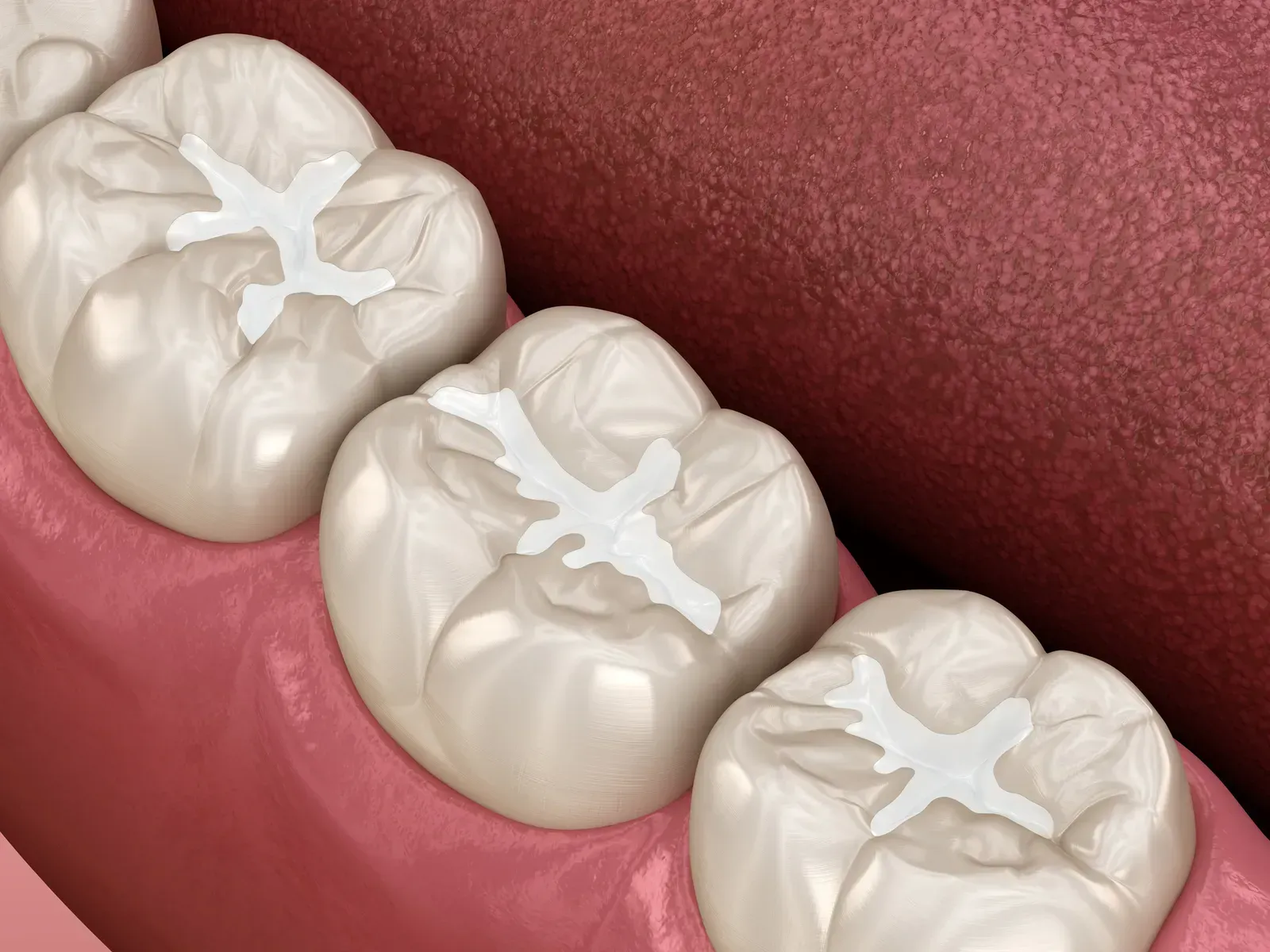
Dental sealants are one of the simplest, most cost-effective ways to keep decay out of the deep grooves of your back teeth, where a toothbrush bristle can't always reach. In just a few painless minutes per tooth, we apply a thin protective coating that can guard your molars against cavities for years.
Preventive Dentistry
A Thin Shield That Keeps Cavities Out of Your Molars
Dental sealants are one of the simplest, most cost-effective ways to keep decay out of the deep grooves of your back teeth, where a toothbrush bristle can't always reach. In just a few painless minutes per tooth, we apply a thin protective coating that can guard your molars against cavities for years.
As part of our general dentistry program at Newark Smiles Dental, sealants are one of the easiest preventive steps a patient of any age can take between regular checkups. They are quick, comfortable, and require no drilling or numbing, making them a favorite recommendation for both children just getting their adult molars and adults looking to avoid future fillings.
Signs You or Your Child May Benefit from Dental Sealants
Most people don't realize how much decay risk hides in the chewing surfaces of the back teeth. Molars and premolars have narrow pits and fissures that are naturally deeper and harder to clean than smooth front teeth. Food particles and bacteria settle into these grooves, and even careful brushers can miss them because the bristles simply can't reach the bottom of a fissure that is often narrower than a single bristle tip.
During a routine exam, our dentists check for the specific warning signs that point toward sealants as a smart preventive step, rather than waiting until decay has already started and a filling becomes necessary.
Deep grooves and pits: Molars with narrow, sharply cut fissures trap plaque and food debris far more easily than flatter tooth surfaces, making them prime candidates for a protective coating.
Newly erupted permanent molars: The six-year and twelve-year molars are the two highest-risk teeth for childhood cavities, and sealing them soon after they emerge offers the strongest long-term protection.
Early signs of staining in the grooves: Dark lines or brown staining along a fissure, without an actual cavity yet, is a strong signal that a sealant can stop the process before it becomes decay.
History of cavities on chewing surfaces: Patients who have already needed fillings on their molars are statistically more likely to develop new decay on the remaining unfilled teeth.
Difficulty reaching back teeth with a brush: Younger children, patients with braces, or anyone with limited dexterity often struggle to clean the very back molars thoroughly.
A diet higher in sugar or frequent snacking: More frequent exposure to sugars and starches accelerates the acid attacks that cause enamel breakdown in vulnerable grooves.
Who Is a Good Candidate for Dental Sealants?
Sealants are frequently associated with children, and for good reason: the American Dental Association recommends sealing permanent molars as soon as they fully erupt, typically around age six and again around age twelve. But candidacy for this treatment isn't limited by age. Our team evaluates every patient individually, looking at tooth anatomy, decay history, and daily habits rather than assuming that only kids qualify.
Adults who have gone their whole lives without a cavity on a particular molar, or who are simply looking to reduce future dental work, are often excellent candidates as well. The main requirement is a healthy, cavity-free tooth surface, since sealants work by covering sound enamel, not by treating existing decay.
Children and pre-teens with new permanent molars: The window right after a molar erupts is the ideal time to seal it, before it has a chance to develop any decay.
Teens navigating orthodontic treatment: Braces make brushing back teeth more difficult, so sealing molars during this stage adds an extra layer of protection when hygiene is hardest to maintain.
Adults with deep, decay-prone grooves: Anatomy doesn't change with age; adults with naturally deep fissures can benefit from sealants just as much as children do.
Patients with a higher cavity rate: If you've needed several fillings in the past, sealing your remaining healthy molars is a proactive way to break that pattern.
Anyone wanting to reduce future dental costs: Sealants cost a fraction of a filling, making them a smart, budget-conscious investment in long-term oral health.
Key Health & Financial Benefits of Sealants
Sealants do far more than fill a small gap in a tooth's surface. They fundamentally change how easy it is to keep that tooth clean and decay-free for years at a time, and the benefits stack up in ways that go beyond the mouth alone.
Because the treatment is so quick and affordable relative to restorative work, sealants consistently rank among the highest-value preventive services in dentistry. Choosing sealants now is choosing to avoid drilling, numbing, and higher costs later.
Up to 80% reduction in cavity risk: Studies consistently show sealed molars develop far fewer cavities than unsealed molars over multiple years of wear.
Long-lasting protection: A properly applied sealant can hold up for five to ten years with normal wear, and we check its condition at every routine visit.
Avoids more invasive treatment later: Preventing a cavity means avoiding a filling, and avoiding a filling means never risking the crown or root canal that can follow untreated decay.
Cost savings over a lifetime: A sealant costs a fraction of a single filling, which makes it one of the most efficient investments you can make in your family's dental budget.
No downtime or discomfort: The application involves no anesthesia, no drilling, and no recovery time, so patients return to normal eating almost immediately.
Supports healthier smiles at every age: Fewer cavities mean fewer restorations, which helps preserve natural tooth structure over the course of a lifetime.
Caring for Sealants and Making Them Last
Sealants require no special routine beyond the good habits we already recommend for everyone: brushing twice a day, flossing daily, and keeping up with regular cleanings and checkups. There's no adjustment period and nothing unusual to feel once the resin has set, since the coating is thin enough that most patients forget it's even there within a day or two.
That said, sealants aren't permanent, and how well you care for your teeth overall directly affects how long they last. We check the condition of every sealant at your regular cleaning appointments and can reapply or touch up a section if normal chewing wear starts to thin it out.
Keep up regular brushing and flossing: Sealants protect the chewing surfaces, but the sides of the same teeth still need thorough daily cleaning to stay cavity-free.
Avoid chewing on very hard objects: Ice, hard candy, and pen caps can chip or wear down a sealant faster than normal eating, so it's best to skip these habits altogether.
Attend every six-month checkup: Routine visits let us visually and physically confirm the sealant is still intact and reapply it early if it's showing signs of wear.
Report any rough spots or sensitivity: If a section feels chipped or a tooth becomes sensitive, let us know so we can evaluate and reseal it before decay has a chance to start.
Combine with fluoride treatment: Pairing sealants with fluoride varnish strengthens the surrounding enamel for even broader protection against decay.
What to Expect: Your Dental Sealant Appointment
01
Exam and Evaluation
We start by examining the chewing surfaces of your molars and premolars, checking grooves for depth, staining, and any early decay that would need treatment before a sealant can be placed.
02
Cleaning the Tooth Surface
Each tooth is thoroughly cleaned and dried so the sealant material can bond securely to the enamel without any debris getting trapped underneath it.
03
Preparing the Enamel
A mild etching solution roughens the tooth surface slightly, which helps the sealant material grip the enamel more effectively once it's applied.
04
Applying the Sealant
The liquid resin is painted directly into the grooves and pits of the tooth, flowing into every crevice to create a smooth, protective barrier.
05
Curing the Material
A special curing light hardens the sealant in seconds, bonding it firmly to the tooth so it's ready for immediate everyday use.
06
Final Bite Check
We check your bite to make sure the sealant feels comfortable and doesn't interfere with how your teeth come together, then you're free to eat and drink right away.
Why Newark Families Choose Newark Smiles Dental for Sealants
As a trusted dentist in Newark, we know that preventive care works best when it's easy, comfortable, and built around your family's actual schedule and needs. Dental sealants fit that philosophy exactly: a fast, painless visit today that helps you avoid a much bigger appointment later.
Whether you're bringing in a child for their first set of permanent molars or you're an adult tired of new cavities showing up in the same spots, our team takes the time to explain exactly what we see and why sealants make sense for your specific teeth.
Family-friendly, patient-paced visits: We take extra time with younger patients so their first preventive treatments feel calm and easy, not rushed.
Sealants paired with your regular checkup: We combine sealant application with your routine exam and cleaning whenever possible so you don't need an extra trip.
Clear, honest recommendations: We only recommend sealants where they'll genuinely help; we won't suggest treatment your teeth don't need.
Convenient Newark location: Being a local dentist near you means shorter appointment gaps and easier scheduling around school and work.
Insurance-friendly preventive care: We help you understand coverage for sealants, which many plans support fully or partially for children and teens.
A true prevention-first mindset: Sealants reflect our broader approach to general dentistry: catch problems before they start, rather than treating them after the fact.
Frequently Asked Questions About Dental Sealants
Does getting a dental sealant hurt?
No. Sealant application involves no drilling, no needles, and no anesthesia. The tooth is cleaned, a mild solution is applied to prepare the enamel, and the sealant material is painted on and hardened with a curing light. Most patients feel nothing more than mild pressure, if anything at all.
How long do dental sealants actually last?
With normal wear and good oral hygiene, sealants typically hold up for five to ten years. We check them at every routine cleaning and can touch up or reapply a sealant if it starts to show signs of thinning or chipping.
Are sealants only for children?
Not at all. While sealants are most commonly recommended for children and teens right after their permanent molars come in, adults with deep grooves or a history of cavities on chewing surfaces can benefit just as much. We evaluate candidacy individually, regardless of age.
Can I eat and drink normally right after treatment?
Yes. Because the sealant is fully hardened with a curing light before you leave, there's no waiting period. You can eat, drink, and go about your day right after your appointment without any restrictions.
Do sealants replace the need for regular brushing and flossing?
No. Sealants protect only the chewing surfaces of your molars. The sides of your teeth and the spaces between them still need thorough daily brushing and flossing, along with regular checkups, to stay fully protected against decay.
Will my dental insurance cover sealants?
Many dental insurance plans cover sealants fully or partially, particularly for children and teens, since they're recognized as an effective preventive measure. Our team will help verify your benefits and walk you through any out-of-pocket cost before treatment begins.
New Patients & Emergency Appointments Welcome
Book your visit today and let our friendly team take great care of you.
 7340 Thornton Avenue, Newark, CA 94560, United States