



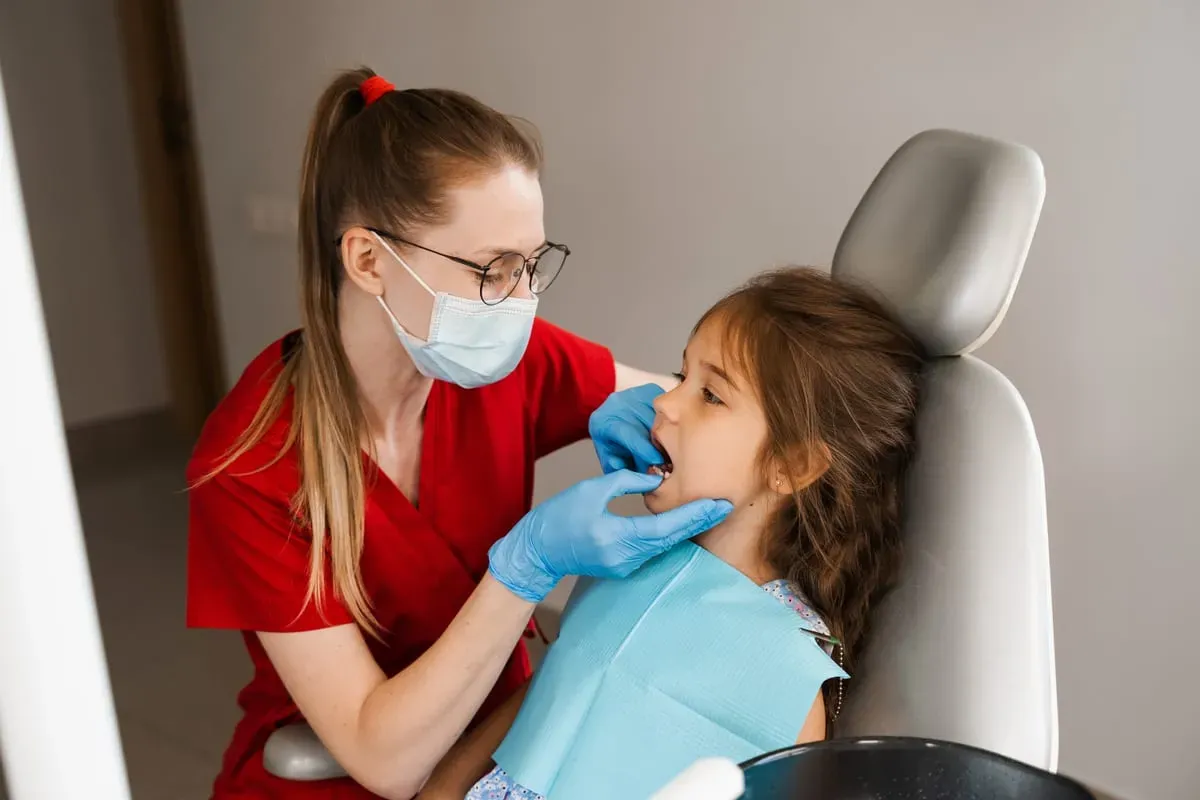
Losing one tooth or several can change far more than your smile. It affects how you chew, how you speak, and often how confident you feel walking into a room. For many adults in Newark, dentures remain one of the most practical, time-tested ways to restore a full set of teeth without surgery, and modern dentures look and feel nothing like the ones your grandparents may have worn.
At Newark Smiles Dental, we see patients at every stage of tooth loss, from someone missing a single molar to someone who needs a complete new set of upper and lower teeth. The right denture solution depends on how many teeth you're missing, the health of your remaining teeth and gums, and your personal goals for comfort and appearance. This article walks through what full and partial dentures actually are, how they're made, what daily life with them looks like, and how to decide which option fits your situation.
Whether you're exploring options for the first time or you're unhappy with an older set of dentures that no longer fits well, understanding the process can make the decision a lot less overwhelming.
What Full and Partial Dentures Actually Are
A full denture, sometimes called a complete denture, replaces an entire arch of teeth, either the upper, the lower, or both. It rests directly on the gum ridge and is held in place by suction, the natural contours of your mouth, and in many cases a small amount of denture adhesive. A partial denture, by contrast, is designed for patients who still have some healthy natural teeth remaining. It fills the gaps left by missing teeth and typically clips onto the surrounding teeth using discreet metal or tooth-colored clasps.
Both types are custom-built from impressions of your mouth, so the fit is unique to you rather than a generic shape pulled off a shelf. The base is usually made from a durable, gum-colored acrylic resin that blends with your natural tissue, while the visible teeth are crafted from porcelain or a hard resin material chosen to match the shade and shape of your remaining teeth as closely as possible.
What surprises a lot of our patients is how much denture technology has improved. Newer materials are lighter, more resistant to staining, and shaped with more natural-looking translucency than dentures made even a decade ago. The goal is not just to fill gaps, but to give you back a bite that works and a smile that looks like your own.
How We Determine Which Option Fits You
Choosing between a full and a partial denture isn't really a matter of preference so much as a matter of what your mouth needs. If you've lost all of your teeth in one or both arches, whether from advanced decay, gum disease, or trauma, a full denture is the appropriate replacement. If you still have some strong, stable teeth, preserving them with a partial denture is almost always the better long-term choice because it keeps more of your natural bone and tissue active.
During your consultation, we look closely at the condition of any remaining teeth, the health of your gums, and the amount of bone support in your jaw. Teeth that are loose, badly decayed, or surrounded by receding gum tissue may need to be addressed before a denture can be fitted properly. We also take into account your bite alignment and facial structure, since both full and partial dentures are shaped to support your lips and cheeks in a way that looks natural rather than sunken or overly full.
- Several teeth missing on one side: A removable partial denture can fill those gaps while clasping securely to nearby healthy teeth.
- All teeth lost in one arch: A full denture restores the entire arch and re-establishes your bite against the opposing teeth.
- Remaining teeth are structurally weak: Sometimes it makes more sense to extract a few failing teeth and move to a full denture rather than repeatedly repairing them.
- Significant bone loss: This can affect how a denture sits and may point us toward additional support options, which we'll discuss during your exam.
What to Expect During the Fitting Process
Getting fitted for dentures is a gradual process, and that's by design. Rushing a denture fitting tends to produce a poor result, so we build in several appointments to get the shape, bite, and appearance right before anything is finalized. The process typically begins with a thorough exam, including X-rays, to evaluate your jaw structure and any remaining teeth.
From there, we take detailed impressions and measurements of your bite, which are sent to a dental lab to craft a model. You'll usually try in a wax version of the denture first, which lets us check the fit, the way your teeth line up, and how your new smile looks before the final piece is made. This is your chance to weigh in on the shade, the shape of the teeth, and even the overall look, since small adjustments at this stage are much easier than after the final denture is processed.
Once everything looks right, the final denture is processed in hard acrylic and delivered for a fitting appointment. We check that it sits evenly, that your bite feels balanced, and that there are no sore spots. A short follow-up visit a week or two later is common, since your gum tissue needs a little time to settle and tell us exactly where fine-tuning is needed.
Adjusting to Your New Dentures
It's completely normal for a new denture to feel unfamiliar at first. Your tongue, cheeks, and lips need time to learn how to work with the new shape in your mouth, and most patients notice this adjustment period lasts anywhere from a few days to a few weeks. Speaking certain words may feel different initially, and we usually recommend practicing by reading aloud or speaking slowly until your mouth adapts.
Eating With a New Denture
Chewing is often the biggest adjustment. We suggest starting with soft foods cut into small pieces, chewing evenly on both sides of your mouth rather than favoring one side, and slowly reintroducing firmer foods as your confidence builds. Sticky foods and very hard items like whole nuts or hard candy are worth avoiding, especially in the first few weeks, since they can shift a new denture out of place.
Minor soreness or a bit of excess saliva in the first several days is common and typically resolves on its own. If a sore spot persists beyond a week, it usually means the denture needs a small adjustment, which is a quick and routine part of the process. We'd rather see you for a five-minute adjustment than have you push through discomfort or stop wearing the denture altogether.
Caring for Your Dentures Day to Day
Dentures need consistent daily care, much like natural teeth, to stay clean, odor-free, and comfortable. Plaque and food particles can build up on a denture just as they do on real enamel, and leaving them uncleaned can lead to gum irritation or an unpleasant taste and smell over time. The good news is the routine is simple once it becomes habit.
- Rinse after every meal: This clears loose food particles before they have a chance to settle against the denture base or your gums.
- Brush daily with a soft denture brush: Regular toothpaste can be abrasive, so a non-abrasive denture cleaner is gentler on the acrylic surface.
- Soak overnight: Keeping dentures moist in water or a denture-soaking solution prevents them from drying out, warping, or losing their shape.
- Clean your gums and tongue too: A soft brush over your gum ridge and tongue each day supports healthy tissue underneath the denture.
- Keep up with checkups: Routine visits let us check the fit, since your gum ridge naturally changes shape over time, even after a denture is placed.
One detail that's easy to overlook: dentures should never be left to dry out completely, and they shouldn't be cleaned with hot water, which can warp the acrylic. A dropped denture can also crack, so cleaning over a folded towel or a sink filled with water adds a simple layer of protection.
When Implant-Supported Dentures Make Sense
Traditional dentures rely on suction and the shape of your gum ridge to stay in place, which works well for most patients but can feel less secure for others, especially with a lower denture, since the lower jaw naturally provides less surface area for suction than the upper arch. For patients who want more stability, implant-supported dentures offer an alternative worth discussing.
In this approach, a small number of dental implants are placed in the jawbone, and the denture is designed to snap onto or be anchored by those implants. This dramatically reduces shifting while chewing or speaking and also helps preserve jawbone density, since implants stimulate the bone in a way that a traditional denture resting on the gums cannot. It's a bigger investment of time and cost upfront, but many patients find the added stability changes how comfortable they feel eating and talking in everyday situations.
Not everyone is a candidate for implant support right away, particularly if there's been significant bone loss, but that doesn't rule it out permanently. We can evaluate your bone structure and walk you through whether this route fits your goals, your timeline, and your budget, or whether a well-fitted traditional denture is the more practical starting point.
Key Takeaways
- Full dentures replace an entire arch, while partial dentures fill gaps while preserving remaining healthy teeth.
- Modern denture materials are lighter and more natural-looking than older versions.
- Fitting is a multi-step process with wax try-ins and adjustment visits to get the fit right.
- Daily cleaning, overnight soaking, and routine checkups keep dentures comfortable and long-lasting.
- Implant-supported dentures are an option for patients who want extra stability and bone preservation.
Frequently Asked Questions
How long do full or partial dentures typically last?
Most well-maintained dentures last five to ten years, though your gum ridge and jaw naturally change shape over time, which can affect the fit. Routine checkups help us catch these changes early so the denture can be relined or adjusted rather than needing a full replacement sooner than necessary.
Will my dentures look obviously fake?
Not with today's materials and a thoughtful fitting process. We shape and shade the teeth to match your natural coloring and facial structure, and the wax try-in step gives you a chance to approve the look before anything is finalized.
Can I sleep in my dentures?
We generally recommend taking dentures out at night to let your gum tissue rest and to reduce the risk of irritation or bacterial buildup. Storing them in water or a soaking solution overnight also helps the material maintain its shape.
Do partial dentures damage the teeth they clasp onto?
A properly designed and fitted partial denture shouldn't harm your remaining teeth. Clasps are custom-fitted to distribute pressure evenly, and we monitor those teeth at every checkup to make sure they stay healthy and stable over time.
What if my denture feels loose after a few years?
A looser fit is common as your gum ridge naturally reshapes over time. This usually doesn't mean you need a brand-new denture; a reline, where the base is refitted to your current gum contours, often restores a secure, comfortable fit.
Finding the Right Fit for Your Smile
Missing teeth don't have to mean giving up on comfortable eating, clear speech, or a smile you feel good about. Full and partial dentures remain a reliable, proven way to restore both function and appearance, and the process has become far more refined than many people expect. From the first impression to the final fitting, every step is built around getting the shape, bite, and look right for your individual mouth.
If you're dealing with missing teeth, a denture that no longer fits comfortably, or you're simply exploring your options, our team at Newark Smiles Dental is here to walk you through what makes sense for your situation. A conversation and an exam are the best starting point for understanding which path fits your mouth, your lifestyle, and your goals.